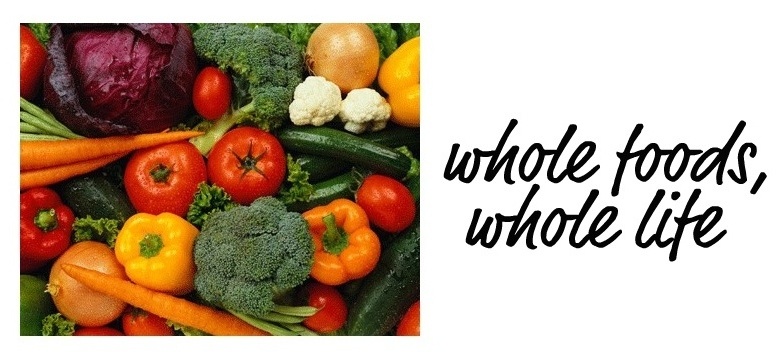
I received some health counseling last summer from a graduate of the Institute for Integrative Nutrition, Eve. She was the one who inspired me to pursue the program once I was well. She mailed me several books throughout the course of our 6 month counseling program. One of them was "Greens, Glorious Greens!" by Johnna Albi & Catherin Walthers. I have to admit I haven't used the recipes in the book as much as I'd like, but it has some great ideas on how to cook a variety of greens. Eve's first suggestion for us was to get to know greens and eat them! She gave us a variety of ideas on how to prepare them so they would be tasty. After all, greens are amongst the most healing foods that you can put into your body.
As we all know, greens are not that enticing when plain. We have to do something to them to make them taste good. A homemade dressing or even a bit of organic butter and sea salt really help make greens palatable. Another way to prepare greens is to mix them into a green smoothie. I don't do well with much fruit, so I put a little bit of lemon with the peel and a natural sweetener derived from an herb called stevia along with my greens and other veggies. Stevia helps to take the edge off of collard greens and kale, especially. But most of you could mix your greens with some fruit and you won't even notice the "green" taste!
I was listening to a lecture a couple of weeks ago on "Food Energetics". The premise of food energetics is that, literally, "you are what you eat". For example, walnuts have long been considered a brain food. Today we know that walnuts are the only nut that contains omega 3 fatty acids which are essential for brain and nervous system development.
In relation to greens, the lecturer, Steve Gagne, talked about all of the fabulous properties of greens and the wonderful things that they do for our bodies. Leafy green plants are supportive to the respiratory and circulatory system. If you look at the network of veins and arteries in a leafy green plant, flowing through these veins are small molecules of chlorophyll and vitamin C. This makes leafy greens highly supportive of oxygenating the blood. Leafy greens also contain calcium and magnesium, which make them the most powerful food to use for improved respiration. They are high in fiber, iron and antioxidants. In general, more leafy green consumption means better breathing, more oxygenated blood, better glow to our skin, and more life and vitality!
I will give you some recipes in another post!
Showing posts with label Nutrition 101. Show all posts
Showing posts with label Nutrition 101. Show all posts
Monday, November 29, 2010

Friday, November 19, 2010
Healthy and Unhealthy Fats
As a society, we have developed a fear of fat in our quest to stay healthy and lose weight. The low-fat movement, which arose in the 80's, is what started this trend. In order to make foods still taste good after the fat had been reduced, food makers replaced the fat with sugar. The problem, then, became that sugar was actually more of a culprit in fat accumulation and weight gain than fat was! So, in reality, the products didn't become any healthier by becoming "low-fat".
Our bodies need a particular amount of fat, but healthy fat. Proper amounts of healthy fat are a good addition to our diet. Examples of healthy fats are avocados, nuts and nut butters, seeds, olives and unrefined oils such as coconut oil, olive oil and flax seed oil.
We need to be especially careful of trans fats when evaluating the types of fats that we consume. The omega-3 fatty acids in liquid oil cause it to go rancid rather quickly. So to prolong the shelf life of various processed and packaged foods, liquid oil is converted into a solid through the partial hydrogenation process. Think about the fact that trans fats are prolonging the shelf life of some foods. Then we ingest those foods. What might that be doing to your body? What does it do to YOUR shelf life?
Fortunately, food makers are now required to report the amount of trans fats on the nutritional labels of their products. Any amount less than .5 grams of trans fats will translate to zero on the label. So to be sure that the product is free of trans fats, check the ingredient list for hydrogenated or partially hydrogenated oils. Also be aware that many restaurants use trans fats to fry their foods.
I challenge you to start reading labels and see what the labels in your house say. It might be unrealistic to completely rid your house of trans fats overnight, but being aware is the first step. Once you are aware, then you can take baby steps to try and reduce or eliminate the amount of trans fats that you are consuming.
In an effort to be semi-brief, I have only scratched the surface of all the information out there on different types of fats. If you are interested in reading more, I found the following article to be quite comprehensive on the topic.
http://www.med.umich.edu/umim/food-pyramid/fats.htm
Our bodies need a particular amount of fat, but healthy fat. Proper amounts of healthy fat are a good addition to our diet. Examples of healthy fats are avocados, nuts and nut butters, seeds, olives and unrefined oils such as coconut oil, olive oil and flax seed oil.
We need to be especially careful of trans fats when evaluating the types of fats that we consume. The omega-3 fatty acids in liquid oil cause it to go rancid rather quickly. So to prolong the shelf life of various processed and packaged foods, liquid oil is converted into a solid through the partial hydrogenation process. Think about the fact that trans fats are prolonging the shelf life of some foods. Then we ingest those foods. What might that be doing to your body? What does it do to YOUR shelf life?
Fortunately, food makers are now required to report the amount of trans fats on the nutritional labels of their products. Any amount less than .5 grams of trans fats will translate to zero on the label. So to be sure that the product is free of trans fats, check the ingredient list for hydrogenated or partially hydrogenated oils. Also be aware that many restaurants use trans fats to fry their foods.
I challenge you to start reading labels and see what the labels in your house say. It might be unrealistic to completely rid your house of trans fats overnight, but being aware is the first step. Once you are aware, then you can take baby steps to try and reduce or eliminate the amount of trans fats that you are consuming.
In an effort to be semi-brief, I have only scratched the surface of all the information out there on different types of fats. If you are interested in reading more, I found the following article to be quite comprehensive on the topic.
http://www.med.umich.edu/umim/food-pyramid/fats.htm
Subscribe to:
Posts (Atom)


